
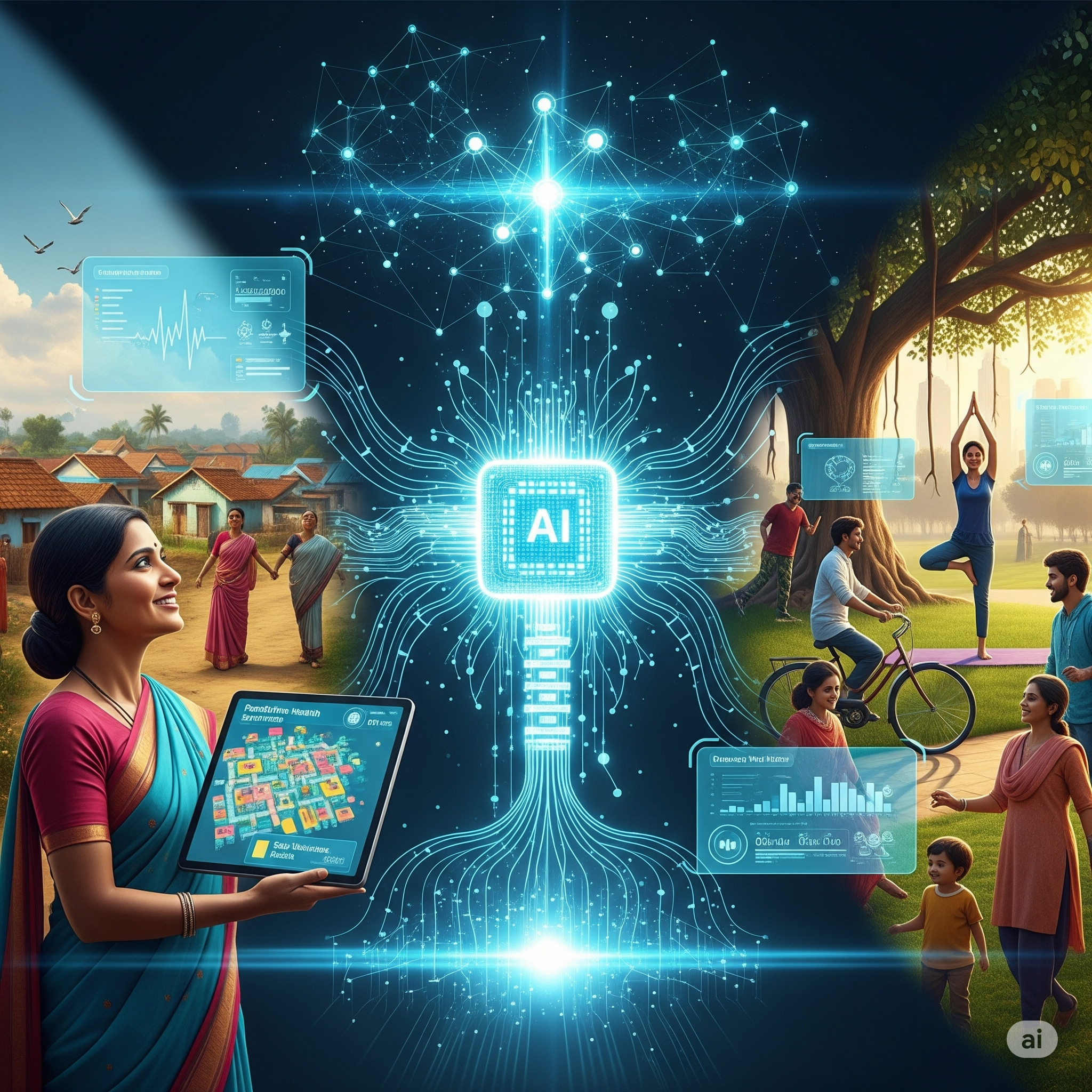
Transforming the Healthcare Ecosystem of India

Agentic AI in healthcare refers to intelligent systems capable of making context-aware decisions and taking autonomous actions to achieve defined goals, whether it’s streamlining hospital operations, optimizing patient journeys, or augmenting complex clinical workflows. Unlike traditional rule-based automation, agentic AI learns, adapts, and collaborates with human healthcare professionals, enabling real-time, data-driven interventions that improve patient outcomes and reduce systemic inefficiencies.
India’s Current Position in Global Healthcare
India has already emerged as a formidable force in global health tourism, attracting thousands of international patients each year who seek world-class medical expertise at a fraction of Western costs. From organ transplants and advanced cardiac surgeries to complex oncology treatments, the country is demonstrating clinical excellence that rivals the most advanced healthcare systems. The presence of state-of-the-art hospitals, highly skilled surgeons, and a growing ecosystem of medical research institutes strengthens this global positioning.
The Need for a Paradigm Shift

Historically, India’s healthcare discourse has been dominated by a numbers game, counting more doctors, more hospitals, more beds. While these metrics matter, they don’t address the deeper structural challenges:
- Chronic disease management – The rise of diabetes, hypertension, and cancer requires long-term, coordinated care models.
- Lifestyle-related illnesses – Urbanization, dietary changes, and sedentary habits demand proactive prevention strategies.
- Urban–rural disparities – High-quality care remains concentrated in urban clusters, leaving rural populations underserved.
- Catastrophic health spending – A significant portion of Indian households still face severe financial distress due to healthcare costs.
How Agentic AI Can Reshape the Landscape
Agentic AI has the potential to shift focus from quantity to quality, ensuring that care delivery is personalized, predictive, and equitable:
- Population Health Management – AI agents can identify at-risk populations and trigger preventive interventions before conditions escalate.
- Smart Resource Allocation – Predictive models can guide where hospitals, doctors, and medical equipment are most urgently needed.
- Remote Diagnostics & Telemedicine – Autonomous agents can assist rural clinics in diagnosis, triage, and treatment recommendations.
- Clinical Decision Support – AI-powered assistants can help doctors choose optimal treatment plans based on patient history, genetics, and global best practices.
- Operational Optimization – From reducing patient wait times to automating insurance claims, AI agents can streamline administrative bottlenecks.
- Cost Reduction & Access Expansion – Intelligent automation can lower care delivery costs, making high-quality treatment more accessible.
By moving beyond the “more is better” mindset, India can create a patient-centric, tech-enabled healthcare ecosystem that is proactive rather than reactive. Agentic AI will be a critical enabler—not replacing doctors and caregivers, but empowering them to reach more people, with better outcomes, at lower costs.
Areas for Agentic AI Intervention

👨⚕️ 1. Workforce Capacity: Rural India houses 66% of the population but only 33% of healthcare workers. High clinician burnout due to data entry and documentation overload.
🏥 2. Infrastructure & Operational Gaps: due to overcrowded public hospitals with long wait times, manual recordkeeping. Inconsistent use of Electronic Health Records (EHR) and diagnostic data silos. No intelligent triaging system in most hospitals.
💸 3. Healthcare Financing & Insurance: Manual insurance claim processing and delays in Revenue Cycle Management (RCM)
📊 4. Lack of Data-Driven Public Health: Poor disease surveillance and early warning system and delayed epidemic response in rural and low-resource areas. Weak integration with Ayushman Bharat Digital Mission (ABDM) for data sharing.
📉 5. Chronic & Mental Health Burden: Diabetics, and cardiac issues, suicides among women globally & Low awareness, stigma, and accessibility barriers to mental health services.
🌍 6. Rural & Linguistic Divide: 70% of the population in rural areas lack access to specialty care. Existing digital solutions are not designed for local languages, low-literacy users, or non-smartphone contexts.
Potential Agentic/AI-Based Solutions
Triage & emergency – Conversational triage agents that assess symptoms and assign risk scores before human interaction. AI Symptom Checker WhatsApp Bot (multilingual voice/chat)supports preliminary check-up for patients who have no access to physical hospital visit.
Clinician overload – AI scribes reduce documentation time which is vital in high-volume OPD/consultation setups.
Chronic Disease Management – AI wellness coach + SMS/IVR in local languages as 50% of rural diabetes and hypertension cases remain undiagnosed or unmonitored.
Rural Access – AI-powered dashboards using EHR, PHC logs enables real-time alerts for maternal care, vaccination drops, or outbreak prediction, Voice-based agents in local languages that work offline for PHCs.
Diagnostics – Autonomous radiology readers (AI-based) for X-ray, CT, retina scans Helps in areas where X-rays/CTs are done but no radiologist is available.
Oncology & Pathology AI – Scheduling coordination bots: Automate appointment bookings, follow-ups, reminders. Its apt for large networks like Apollo, Fortis etc to handle complex workflow.
RCM & Insurance Claims – AI Bots to pre-auth forms, flag errors, and communicate with TPAs as hospitals deal with high insurance claims and complex billing system.
Mental Health – AI therapy bots for low-cost, scalable counseling, integrated with escalation system.
Public Health – Proactive epidemiology agents that analyze wearable and EHR data to flag outbreaks and chronic disease hotspots.
Intended Outcomes of Agentic AI in Indian Healthcare
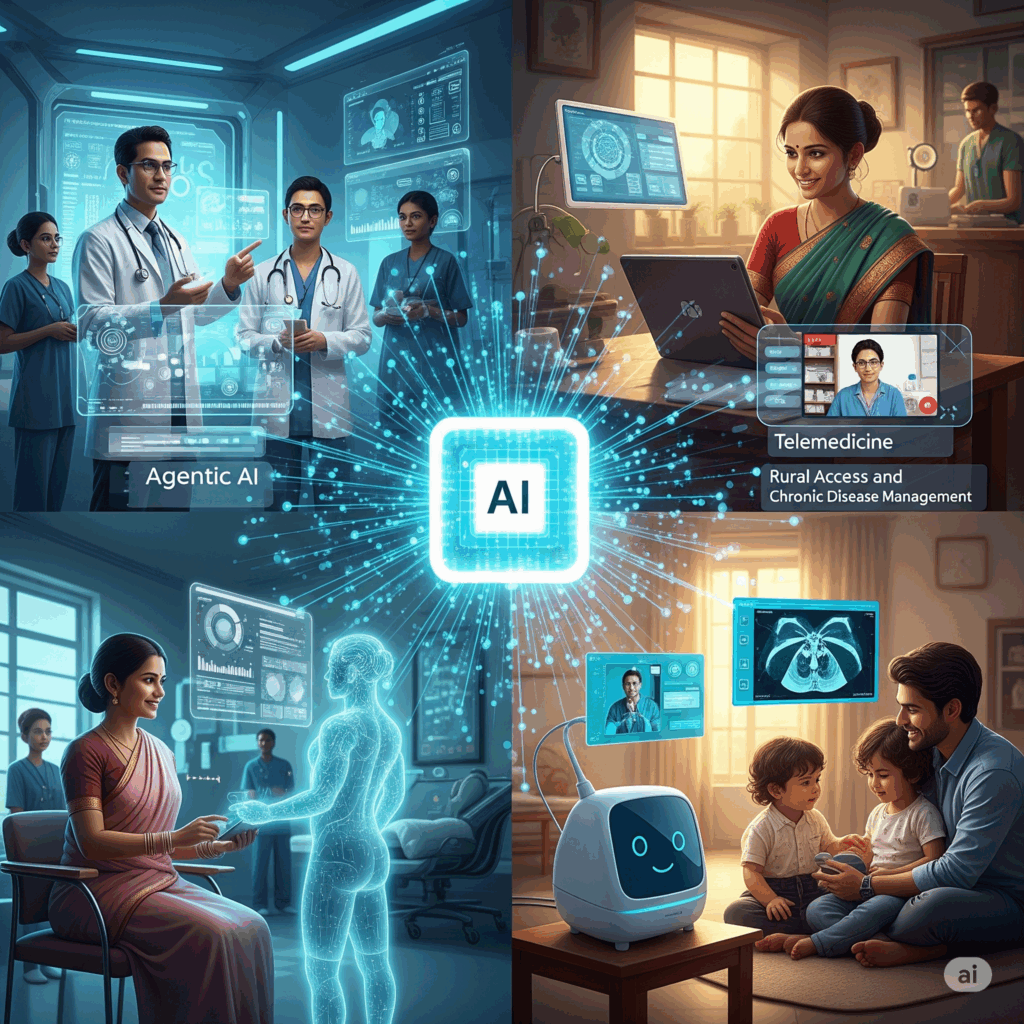
India has a unique opportunity to redefine global healthcare standards—moving away from expensive, hospital-centric models toward a scalable, tech-integrated, and human-centered approach to health creation. The focus must shift from reactive treatment to proactive wellness, where care starts before illness ever occurs.
By deploying Agentic AI and technology-powered decentralization, we can achieve four strategic outcomes:
1. Increase Doctor Availability
Through AI-assisted diagnostics, triage systems, and remote consultations, Agentic AI can multiply the reach of each doctor. By automating routine decision-making and supporting frontline health workers with real-time expert insights, physicians can focus on complex cases while ensuring more patients are seen in less time.
- Impact: More patients treated per day, reduced burnout for doctors, and timely interventions for critical cases.
2. Improve Access
With rural and underserved populations often hours away from specialty care, AI-driven telemedicine, mobile health units, and autonomous health kiosks can bring high-quality care to the doorstep. This reduces dependency on urban hospitals and bridges the urban–rural health divide.
- Impact: Equitable healthcare delivery across geography, reduced travel and cost barriers for patients.
3. Boost Operational Efficiency
From predictive hospital staffing and bed management to automated claims processing, Agentic AI can streamline every operational layer of the healthcare ecosystem. Predictive analytics ensure resources—equipment, medicines, staff—are deployed where they are needed most, reducing waste and delays.
- Impact: Lower operating costs, faster service delivery, and smoother patient experiences.
4. Enable Data-Driven Care
By continuously collecting and analyzing patient data from multiple sources—wearables, EMRs, diagnostics—AI can provide actionable insights for prevention, early detection, and personalized treatment plans. This shifts care from episodic treatment to continuous health monitoring.
- Impact: Better health outcomes, proactive interventions, and a foundation for public health policy decisions backed by real evidence.
The Paradigm Shift
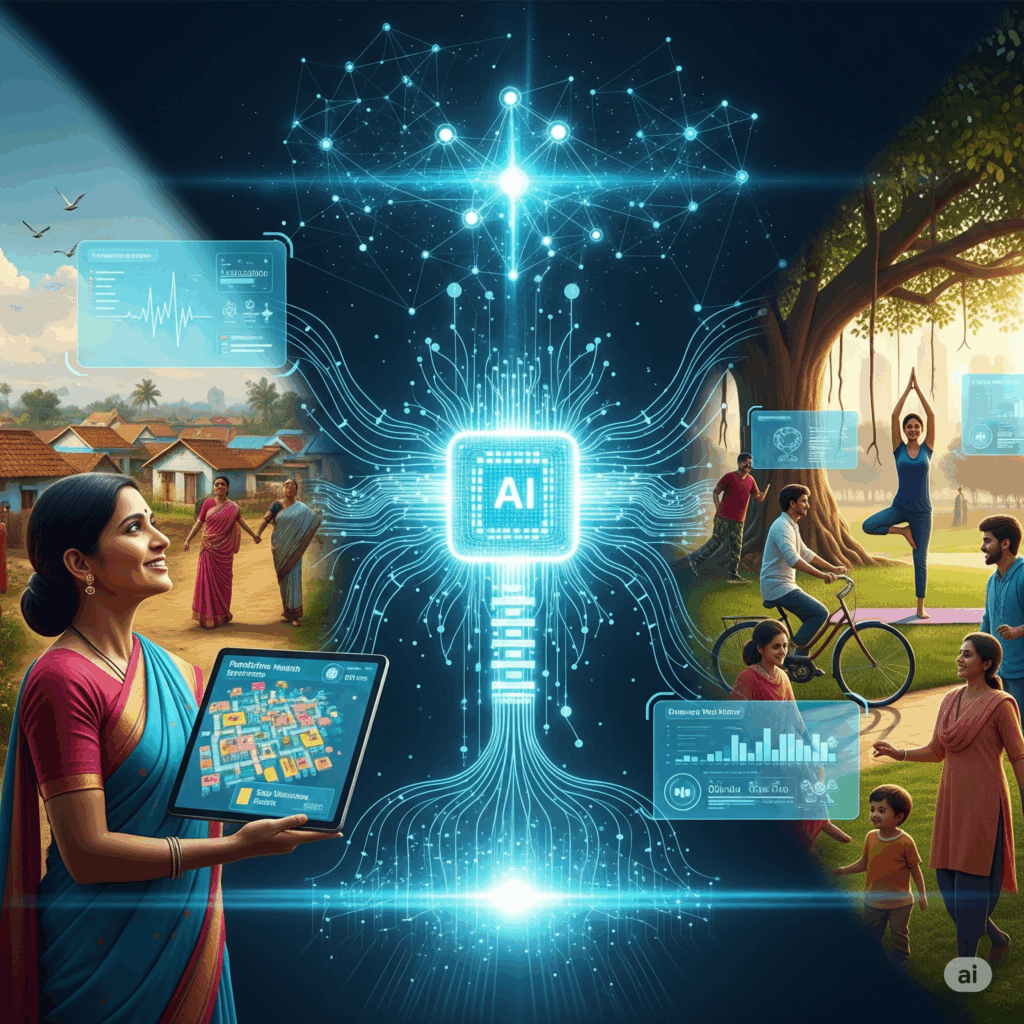
We must stop designing a healthcare system that waits for illness before acting. Instead, India can lead by example in building a resilient, people-centric ecosystem that:
- Prevents illness, not just treats it
- Reduces costs while improving outcomes
- Empowers frontline workers with expert-backed tools
- Creates a proactive, tech-enabled public health model
With Agentic AI as the backbone, this approach will not only transform India’s healthcare delivery but also set a global benchmark for accessible, sustainable, and equitable care.

Leave a Reply